|
List of Papers:
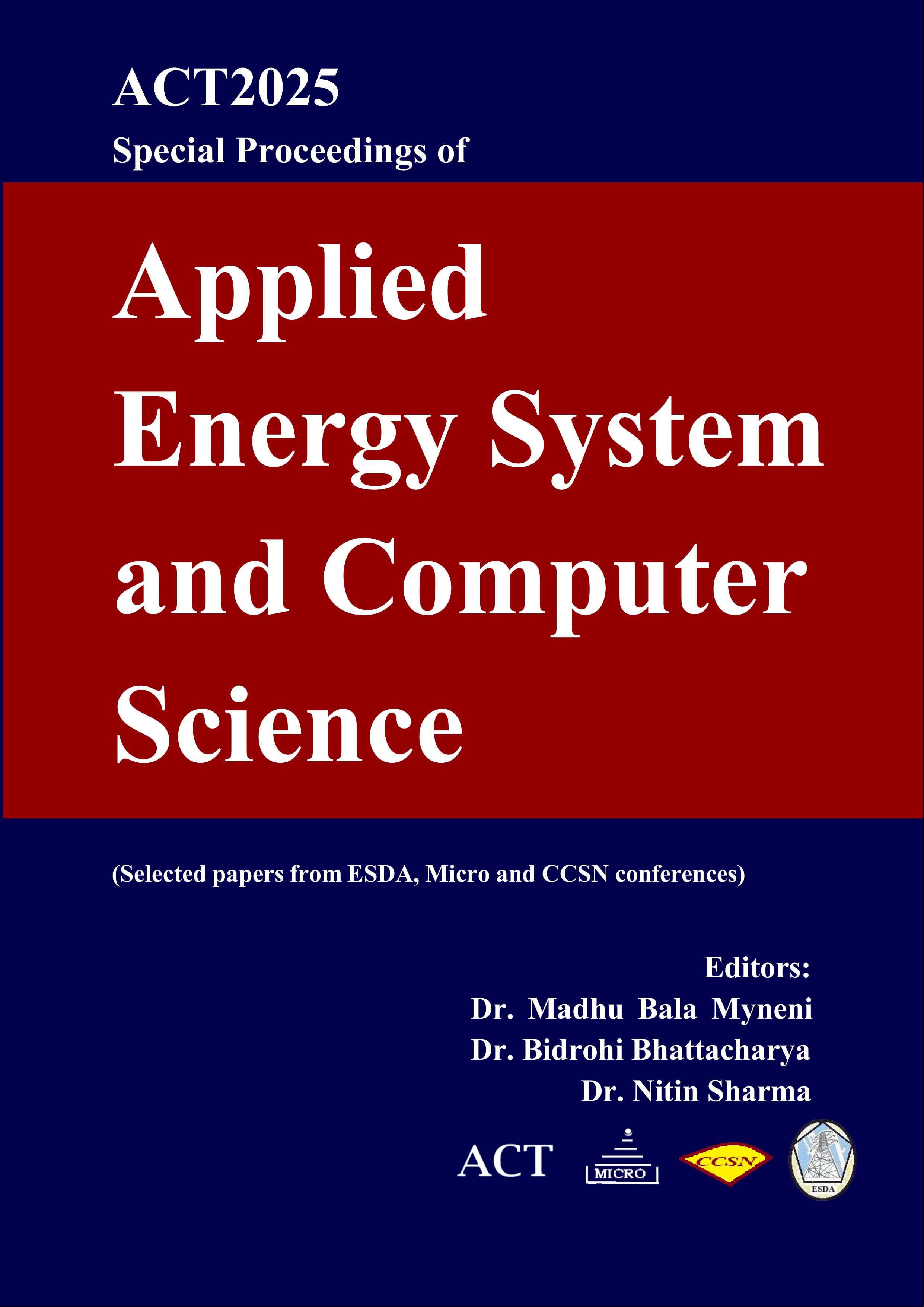
Editorial: Editorial of this Book
AOI :10.100.234512.00037
Click to show/hide Abstract:
ABSTRACT:
Digital watermarking has been extensively employed to ensure copyrighting of images and authenticity, but in some cases, it becomes necessary to remove watermarks such as in restoration of old archives, in forensic investigations, or in the reuse of images in a research database. Conventional watermark removal methods tend to destroy the clarity and structure of the image resulting in conspicuous distortions or blurring. In order to rectify these shortcomings, this paper proposes an efficient watermark removal structure grounded on IMPRINTS (Image Processing and Restoration Techniques). The suggested solution uses superior inpainting algorithms to recreate the hidden image areas following watermark erase and retains the texture, color consistency, and edge continuity. The scheme involves steps of preprocessing, detection of watermarks, mask generation and repair to produce minimum visual artifacts. Experimental tests performed with various watermarked image datasets demonstrate that IMPRINTS outperforms the traditional interpolation and CNN-based watermarking in Peak Signal-to-Noise Ratio (PSNR) and Structural Similarity Index Measure (SSIM). The findings depict that the IMPRINTS process is effective in removing watermarks of high quality in visual images and structural integrity, thus, it is a dependable process in image restoration procedures in the real world.
Keywords: Image Restoration, IMPRINTS, Watermark Removal, Image Inpainting, Edge Detection, PSNR, SSIM, Digital Image processing.
Watermarking Framework Against AI-Powered Removal Attacks
Riyaz Banu Shaik, Kavya Muppala, Harsha Vardhan Reddy Polireddy, Mohammed Saleh Shaik, Himaja Poli,
Department of CSE, Annamacharya Institute of Technology and Sciences, Tirupati, Chittoor District,
Andhra Pradesh – 517520,
Corresponding Author: mkavyaraj28@gmail.com
---------------------------------------------------------------------------------------------
AOI :10.100.234512.00039
Click to show/hide Abstract:
ABSTRACT:
This paper presents an innovative technology called the "smart shoe," designed to assist people with visual or hearing impairments in navigating their surroundings more easily. Equipped with advanced sensors and mini-computers, the shoe can detect uneven surfaces or obstacles in the wearer’s path. It provides feedback through vibrations or sound alerts to help guide them. Developed with ease of use and practicality in mind, this device aims to empower users, fostering greater confidence and independence. The goal of this technology is to create a more inclusive and secure environment for those with sensory challenges.
Keywords: Assistive Technology, Smart Wearables, Obstacle Detection, Accessibility & Inclusive Mobility.
Design Development and Implementation of IOT Based Smart Shoe for Visually Impaired People
Kashish Tarani1, Lavni Singhal1, Tejas Paresh Singh1, Anik Goswami2,
1 School of Computer Science and Engineering, 2 School of Electrical Engineering,
Vellore Institute of Technology, Chennai-600127, INDIA.
Corresponding Author: anik.goswami@vit.ac.in
---------------------------------------------------------------------------------------------
AOI :10.100.234512.00041
Click to show/hide Abstract:
ABSTRACT:
In windows environment PowerShell becomes an integral part who’s responsible for system automation, management and configuration tasks. It is very flexible and helps in performing all the operations, which makes it more popular among developers and users. Yet, this flexibility is also the reason for being targeted for criminal activities by implanting PowerShell scripts in the form of File less malware as it doesn’t leave any trace in memory. So detecting these scripts before execution is the best way to counter the filmless attacks. For that, an authentic and reliable dataset with advanced Machine Learning (ML) and Deep Learning (DL) models was required with the most useful feature sets for better detection. This paper implemented a generalized workflow to create a reliable dataset by collecting PowerShell scripts from different repositories and cleaning the obfuscated script by implementing a deobfuscation technique. Then evaluated them with a well-known antivirus (AV) platform, Virus Total, to label those scripts. The extracted meaningful features from those clean and labelled scripts are passed as inputs to ML models for evaluation of those models. Among defined models, Trigonometric Functional Link Artificial Neural Network (TFLANN) performed outstandingly with an accuracy of 97.68%. The proposed reliable dataset offers effective support to future research in PowerShell-based file less malware detection and can be used to create more effective machine learning-based cybersecurity mechanisms.
Keywords: PowerShell, Fileless Malware, Deobfuscation, RBFNN, Machine Learning.
Generation and Evaluation of Reliable Dataset for PowerShell Based
Fileless Malware Detection: A Machine Learning Approach
Manish Kumar Meher1, Mayank Kumar1, Adyasha Rath1, Ganapati Panda2,
1 Department of Computer Science and Engineering
2 Department of Electronics and Communication Engineering.
C. V. Raman Global University, Bhubaneswar - 752054, India.
*Corresponding Author: ganapati.panda@gmail.com
---------------------------------------------------------------------------------------------
AOI :10.100.234512.00043
Click to show/hide Abstract:
ABSTRACT:
Liver Disease (LD) is one of the most dangerous risks to human health worldwide. Early detection is essential for timely intervention and improved patient survival. The traditional diagnosis relies on manual interpretation by medical experts, a process that can be time-consuming and prone to human error. Machine Learning (ML) offers a promising alternative, delivering faster and more consistent analysis than manual methods. However, relying on a single ML algorithm is limited by its architectural constraints, and the black-box nature of Artificial Intelligence (AI) restricts its real-life adoption. To address these limitations, this work introduces a strategic, explainable AI-based ensemble approach for efficient detection of LD disorders. A two-level learning approach is employed. The original binary dataset is first converted into a multiclass severity structure using recognized medical biomarkers, giving a more clinically useful label than a simple yes/no output. SMOTE is applied to balance the classes before scaling the features. Twelve classifiers are then evaluated individually, and the three strongest models: Random Forest, XGBoost, and CatBoost are combined into a stacking ensemble through an interpretable logistic regression meta-learner. SHAP is applied throughout to explain feature contributions and confirm the meta-learner’s reasoning remains transparent. In a second stage, only Moderate and Severe LD cases are considered, excluding healthy individuals, to give clinicians a sharper basis for treatment decisions. The proposed ensemble achieved an F1-Macro score of 0.8600 (± 0.0158, 95% CI: 0.8461–0.8739), with a Wilcoxon signed-rank test confirming a statistically significant improvement over the best individual classifier (p = 0.0312). This presents a reliable nature of the approach. Its lightweight and interpretable nature enables ease of deployment and adoption in other domains.
Keywords: Liver Disease, Machine Learning, ArtificialIntelligence, Ensemble Learning, LR, SMOTE, SHAP.
A Two-Phase Liver Disease Classification with Stacking Ensemble Models, SHAP Analysis, and Robust Statistical Testing
Sanchita Mohanty, Raj Vikram, Adyasha Rath, Ganapati Panda,
Department of Computer Science and Engineering
C. V. Raman Global University, Bhubaneswar-752054, Odisha, INDIA.
*Corresponding Author: ganapati.panda@gmail.com
---------------------------------------------------------------------------------------------
AOI :10.100.234512.00045
Click to show/hide Abstract:
ABSTRACT:
This comprehensive survey explores the potential for sustainable development of micro agriculture in remote areas of Jharkhand through the integration of hybrid energy systems. Focusing on the synergistic combination of solar and biomass energy, the study examines the technical aspects, benefits, and challenges of implementing these systems. The survey examines economic feasibility, environmental sustainability and the role of key stakeholders including the Jharkhand Renewable Energy Development Agency (JREDA). With emphasis on precision agriculture, this research highlights the transformative impact of hybrid energy solutions on energy access, agricultural productivity, and environmental protection in remote areas of Jharkhand. The findings advocate collaborative efforts between policymakers, researchers, and local communities to realize a greener and more resilient future for micro-agriculture in Jharkhand.
This work summarizes the important results of 34 research documents. These are primarily based on three focus areas (i) the potential of micro agriculture in Jharkhand, (ii) the deployment of hybrid energy (solar and biomass) based power generation, and (iii) the role of stakeholders. The review is expected to support upcoming researchers and power engineering practitioners working on operation and planning including hybrid energy (solar and biomass) based power generation and micro agriculture.
Keywords: Biomass, Hybrid Energy Systems, Jharkhand, JREDA, Micro agriculture, Smart Village, Solar.
Investigation for Sustainable Development of Micro Agriculture through Hybrid Energy Systems (Solar and Biomass) in Remote Areas of Jharkhand: A Comprehensive Survey
Brijesh Singh1, Nitai Pal2, Mukesh Prasad2,3, and Preeti Roy2
1Symbiosis Skills and Professional University, Pune, India.
2IIT (ISM), Dhanbad-826004, India.
3Jharkhand Renewable Energy Development Agency, Ranchi-834002, India.
*Corresponding Author: singhb1981@gmail.com
---------------------------------------------------------------------------------------------
|
Download Paper template of ACT Proceedings from this link.
---------------------------------------------------------------------------------------------
AOI :10.100.234512.00038
Click to show/hide Abstract:
ABSTRACT:
Cognitive ability plays a key role in a student’s growth, influencing how well they can think, remember, calculate, and understand information. This framework introduces a smart semantic chatbot designed to evaluate students' cognitive abilities in a more efficient and personalized way. It automatically gathers student responses through Google Forms, where the questions are thoughtfully grouped into four key areas: Logical Reasoning, Memory & Attention, Mathematical Skills, and Verbal Reasoning. Responses are stored in Google Sheets and fetched dynamically using an API for processing. The scoring system gives points for correct answers (10), medium answers (5), and incorrect ones (0), allowing for a detailed assessment in each domain. After assessing scores, the chatbot provides personalized feedback, identifying strengths and domains to improve, all without repeating itself. Unlike traditional tests, this system shows results in a clear table, helping students easily understand how they did. This proposed framework fills the gap in education by providing a simple, fast, and meaningful way to assess cognitive abilities, with an easy-to-use chatbot. A built-in recommender system further enhances the framework by analyzing students’ scores across the four domains and generating targeted suggestions. Based on performance patterns, it identifies areas where students are lacking, whether in logical reasoning, memory and attention, mathematical skills, or verbal reasoning, and provides specific recommendations for improvement in those weaker domains using association rule mining.
Keywords: Cognitive Ability Assessment, Semantic Chatbot, Student Performance Analysis, Feedback, Recommender System, Association Rule Mining.
Semantic Chatbot for Cognitive Analysis of a Student
Karnam Akhil, V.Baby, Malladi Sri Raksha, Manda Akaash, Malapati Pavan, and Architha Mahendra,
Department of Computer Science and Engineering, Vallurupalli Nageswara Rao Vignana Jyothi Institute of Engineering and Technology,
Bachupally, Hyderabad, 500118 - Telangana,
Corresponding Author: akhilresearch18@gmail.com
---------------------------------------------------------------------------------------------
AOI :10.100.234512.00040
Click to show/hide Abstract:
ABSTRACT:
The rapid growth of electric vehicles (EVs) necessitates the development of robust charging infrastructure. This paper focuses on reviewing advanced charging infrastructure, including converter topologies and quick-charging technologies to meet future demands. The burgeoning popularity of electric vehicles (EVs) necessitates a robust and efficient fast charging infrastructure. This review delves into the technological advancements and practical hurdles associated with high-power charging systems. We examine the latest charging technologies, their impact on EV battery life, and the critical factors influencing widespread deployment. By analyzing the interplay of technology, economics, and policy, this paper offers insights into overcoming stability challenges and optimizing fast charging networks to support the transition to sustainable transportation.
Keywords: Electric vehicle charging station, EV Charging Level, Charging facility, Real-world implementation.
Review on EV Fast Charging, Stability and Deployment
Avinash Prasad1, Nitai Pal*3, Pankaj Sarkar4, Arnab Ghosh5, Brijesh Singh2, Sudipta Chakraborty6,
1,3,4,5 Indian Institute of Technology (Indian School of Mines) Dhanbad, Jharkhand, India.
2 KIET Group of Institutions, Ghaziabad, Uttar Pradesh, India.
6Techno Main Salt Lake, Kolkata, West Bengal, India.
*Corresponding Author: nitai@iitism.ac.in
---------------------------------------------------------------------------------------------
AOI :10.100.234512.00042
Click to show/hide Abstract:
ABSTRACT:
This study proposes a new configuration called Hetero-stacked Dual Metal Gate Tunnel Field-Effect Transistor (HS-DMG-TFET). The suggested device showcases enhanced ON-state current (ION), a heightened ION/IOFF current ratio, and decreased sub-threshold swing, representing a substantial advancement in both DC and switching performance compared to existing TFET topologies. The proposed design includes a dual-metal gate featuring Molybdenum and Aluminium, which overlaps with the Si-Ge pocket. The resulting modifications in electron flow and tunneling behavior within the device lead to improvements in various performance metrics. Significantly, an ION/IOFF ratio of ~1014 is attained, with an ON-state current of 1.41 × 10⁻³ A/μm and an OFF-state current of 1.17 × 10⁻¹⁷ A/μm. The device also exhibits a significantly reduced sub-threshold slope, measuring 9.52 mV/dec, indicating superior transient performance. These DC characteristics underscore the potential of utilizing composite material gates for low-power applications, showcasing their advantages over traditional single-metal counterparts. Besides, enhanced transconductance and other RF performance metrics have been obtained for suggested device which confirms the device's suitability for a variety of analog and RF applications.
Keywords: Tunnel-Field-Effect-Transistor, Subthreshold Slope, Composite-Gate, Molybdenum, Low Power, High-Frequency Applications.
A Simulation Study of Gate-Pocket Overlap Dual Metal Hetero- junction Tunnel Field-Effect Transistor
Kumar M.1, Bhaskar G.1,Bharti A1,Nenavath V1,Prasad S.1 ,Islam A. 1,Koley K. 1,Chaudhary R. 2,
1 Department of Electronics and Communication Engineering
1 Birla Institute of Technology, Mesra, Ranchi, -835215, India.
2 School of Electronics & Electrical Engineering
2 Lovely Professional University, Phagwara, -144411, India.
*Corresponding Author: mukeshnitp33@gmail.com
---------------------------------------------------------------------------------------------
AOI :10.100.234512.00044
Click to show/hide Abstract:
ABSTRACT:
The main objectives of this work are to examine, recommend, and design a silicon-on-insulator (SOI) SoC device that is incorporated inside a metallic container and connected to an optical fiber. In the connected System-on-Chip (SoC) sensor, four specially engineered springs are integrated into the device layer, together with a mass structure and handle layers. For displacement interrogation, an optical reading system with a Fabry-Pérot interferometer (FPI) and a demodulation method is utilized. Because of its great sensitivity and immunity to electromagnetic interference (EMI), the (FPI) is also used. Findings depicts that our proposed SoC sensor show a resonant frequency of 1274Hz with damping ratio of 0.0173 under running conditions up to 7g. This finding fits in nicely with the existing analytical framework. Our experimental findings, however, suggest that our designed SoC sensor has the ability for engineering uses to detect vibrations under extreme electromagnetic ambient situations when compared to other similar designs.
Keywords: Accelerometer; Fabry–Pérot interferometry (FPI); micro-electro-mechanical system (MEMS); silicon-on-insulator (SOI); System-on-chips (SoC); vibration Analysis.
Design, Fabrication, and Characterization of System-on-Chips Accelerometer Using SOI Technologies: A Deep Dive into Secured Interfaces
Eze Nicholas Ude, Odewale Opeyemi Tolulope, Anyalebechi Felicia Nneamaka, Ibeh Ogbonna Mercy Chinenye,
Department of Computer and Robotics Education, University of Nigeria Nsukka
Department of Industrial Technical Education, University of Nigeria, Nsukka
*Corresponding Author: opeyemi.odewale@unn.edu.ng
---------------------------------------------------------------------------------------------
AOI :10.100.234512.00046
Click to show/hide Abstract:
ABSTRACT:
The main objectives of this work are to examine, recommend, and design a silicon-on-insulator (SOI) SoC device that is incorporated inside a metallic container and connected to an optical fiber. In the connected System-on-Chip (SoC) sensor, four specially engineered springs are integrated into the device layer, together with a mass structure and handle layers. For displacement interrogation, an optical reading system with a Fabry-Pérot interferometer (FPI) and a demodulation method is utilized. Because of its great sensitivity and immunity to electromagnetic interference (EMI), the (FPI) is also used. Findings depicts that our proposed SoC sensor show a resonant frequency of 1274Hz with damping ratio of 0.0173 under running conditions up to 7g. This finding fits in nicely with the existing analytical framework. Our experimental findings, however, suggest that our designed SoC sensor has the ability for engineering uses to detect vibrations under extreme electromagnetic ambient situations when compared to other similar designs.
Keywords: Accelerometer; Fabry–Pérot interferometry (FPI); micro-electro-mechanical system (MEMS); silicon-on-insulator (SOI); System-on-chips (SoC); vibration Analysis.
Application of Modified High-Gain, Bridgeless, PFC-type CUK converter for Sustainable Energy Production - A Critical Review
Sayantan Banerjee1, Pradip Kumar Sadhu1, Anik Goswami2, Sagnik Bhattacharya1
1 Department of Electrical Engineering, IIT (ISM), Dhanbad – 826004, India
2 School of Electrical Engineering (SELECT), VIT, Chennai-600127, India
*Corresponding Author: Sbim6065@gmail.com
---------------------------------------------------------------------------------------------
Pay to book project: from India pay by scanning QR code:

Download Per paper, Pay $10 (USD)(or equivalent)(from outside of India)
From outside India:pay through our PayPal account
Account details:
Account Name: Applied Computer Technology
Account Number: 35532552072
Bank name: STATE BANK OF INDIA
IFSC Code: SBIN0001404
Account Type: Current
Branch Name: Kamarhati
Address: 1, B.T.Road, Kolkata-700058, West Bengal, India.
PAN : AVPPA7870E
Phone : +91-8420582707
--------------------------------------
For query about publishing for printed or online version of conference Proceedings, write to: info@actsoft.org or
talk to: +91-6291839750
About indexing of AOI(Applied Object Indexing): it is a new and advanced indexing method for digital and real life hard objects. Any book, paper, picture, medicine,
Land, Building etc. can be indexed with unique number. Clicking that number, the object can be identified with its contents.
List of all papers
---------------------------------------------------------------------------------------------
|
N.B. After publication of all individual papers, full book will be available as PDF format for downloading. *** Any Conference organizers can write to: info@actsoft.org for publishing papers in ACT Proceedings ***